


VAT Compliance in Poland: 2026 Changes Explained
What’s Changing in Polish VAT Rules in 2026?
From 2026, Poland’s VAT system is set to undergo a notable adjustment that may directly affect small businesses and newly established companies. While the amendments are still part of the legislative process, their practical impact is already clear enough to justify early analysis and planning.
At the centre of the reform is a higher VAT exemption threshold, designed to ease administrative burdens for smaller market participants. For entrepreneurs operating close to the current limit, this change may alter how they approach VAT registration and pricing strategies.
Higher VAT exemption threshold: what is being proposed?
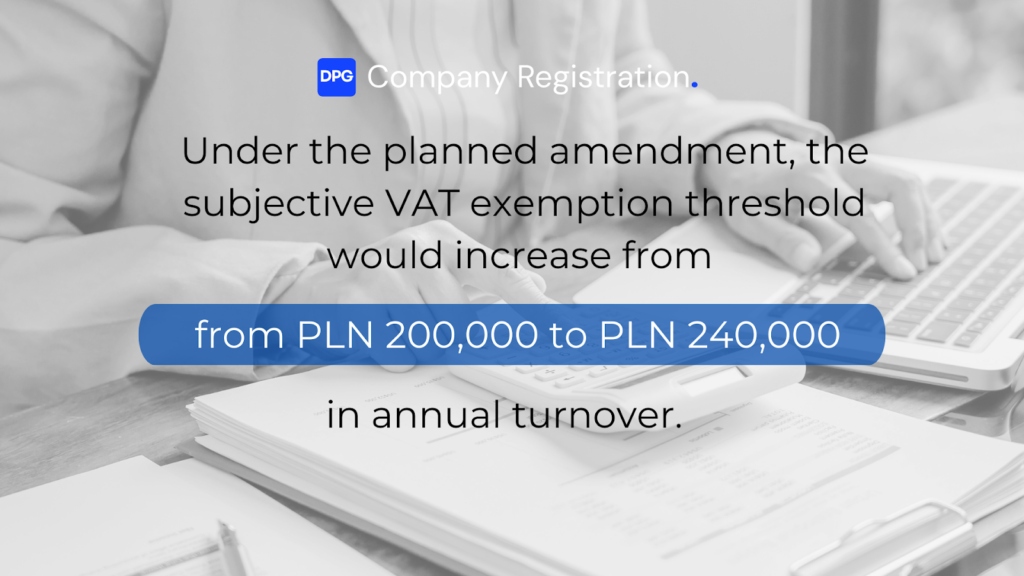
Under the planned amendment, the subjective VAT exemption threshold would increase from PLN 200,000 to PLN 240,000 in annual turnover.
This adjustment is intended to reflect economic realities and inflationary pressures affecting operating costs.
In practical terms, eligible businesses staying below the new threshold could benefit from:
- reduced VAT reporting obligations,
- simplified tax administration,
- greater flexibility when setting prices,
- potentially lower ongoing compliance costs.
For startups and micro-enterprises, this may translate into more time and resources being allocated to business development rather than tax formalities.
VAT exemption is not universal
It is important to note that the VAT exemption will not be available to all businesses. Certain activities remain excluded, regardless of turnover. In particular, consulting and professional services are expected to continue to require VAT registration from the outset.
As a result, entrepreneurs should not assume that the higher threshold automatically applies to their operations. A correct classification of business activity remains essential to avoid compliance risks.
Exemption or voluntary VAT registration?
Crucially, VAT exemption is optional. Businesses that qualify may still decide to register as active VAT taxpayers. This choice should be made after reviewing the company’s specific circumstances rather than treating the exemption as a default solution.
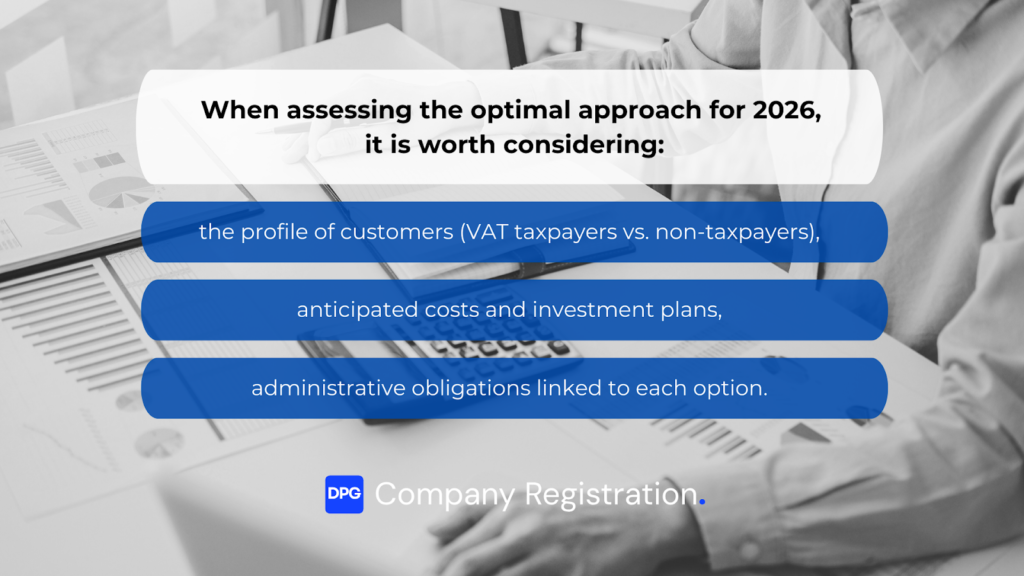
When assessing the optimal approach for 2026, it is worth considering:
- the profile of customers (VAT taxpayers vs. non-taxpayers),
- anticipated costs and investment plans,
- administrative obligations linked to each option.
For many businesses, the upcoming changes make 2026 a natural point to reassess their overall tax and accounting strategy. While the higher threshold creates opportunities, each decision carries long-term consequences that should be evaluated carefully.